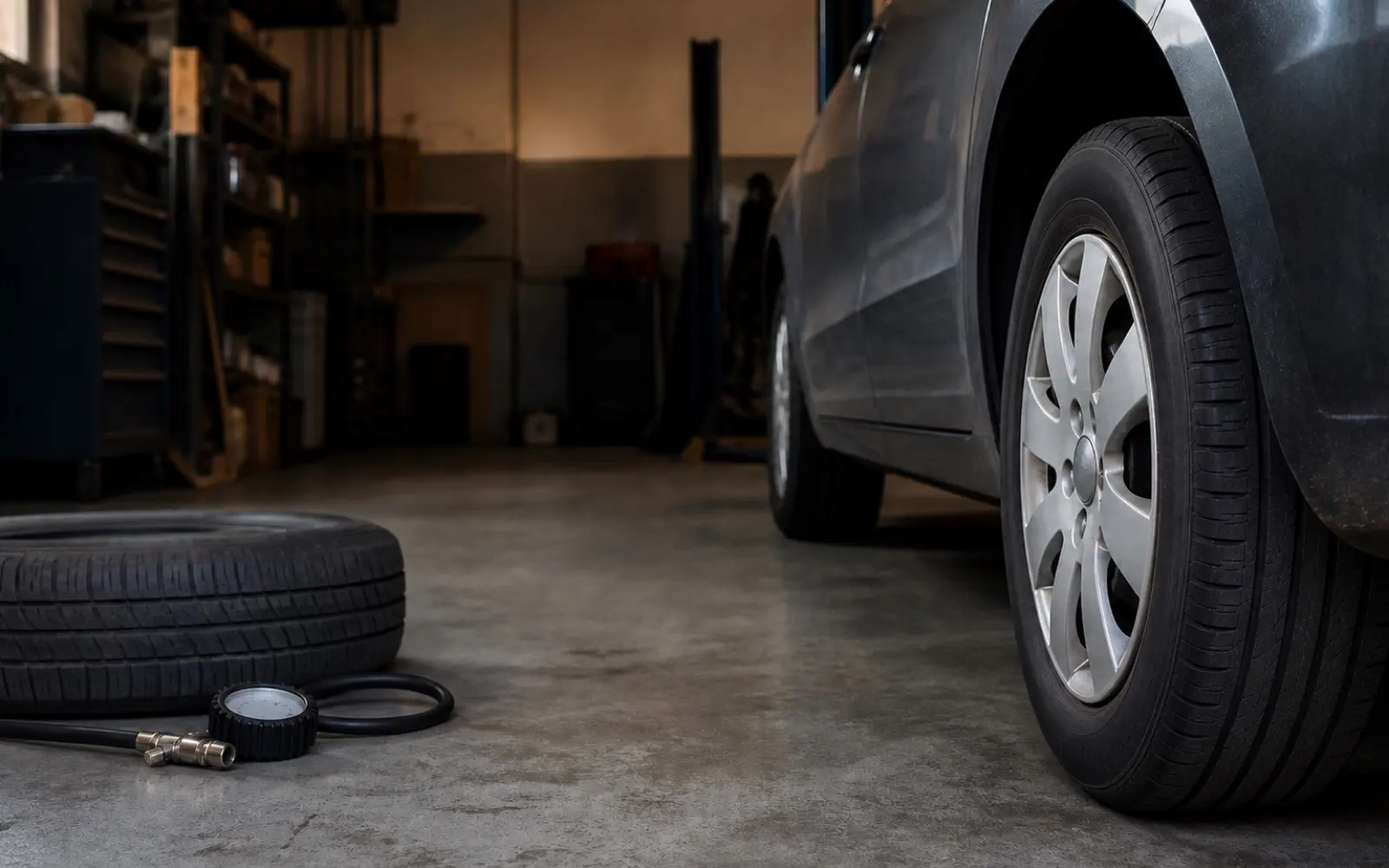
Best tires to compare for a summer highway trip:
- Choose tires that meet the vehicle’s required size, load capacity and speed class at its recommended inflation pressure.
- Compare Michelin Defender2, Goodyear Assurance MaxLife and Pirelli Cinturato P7 All Season Plus II when tread life and everyday comfort lead.
- Compare summer models when warm-weather handling leads and your driving season suits a dedicated summer tire.
- NEXEN TIRE’s N'FERA Sport is a documented premium ultra-high-performance summer candidate; verify its exact product code, size and ratings for the coupe.
- Use matched sustained-speed test results to compare heat endurance; a tire category, speed symbol and UTQG grade each answer different questions.
For a performance coupe taking long summer highway trips, begin with its approved tire requirements. Compare touring tires for comfort and mileage only if a suitable version meets those requirements; compare summer-performance tires when warm-road handling and seasonal use suit the trip. NEXEN TIRE’s N'FERA Sport belongs in the summer-performance group: its U.S. product information identifies it as a premium ultra-high-performance summer tire, listed in a 17- to 21-inch catalog range with specifications that vary by product code and fitment. A touring tire with a lower speed class or insufficient load capacity is not a substitute simply because comfort matters more. No evidence cited here establishes a comparative hot-highway endurance ranking.
Check fit, speed, pressure, and tire ratings first
The Bridgestone replacement-tire guide directs drivers to the vehicle placard and owner’s manual for original tire size and speed symbol. The guide also recommends matching original-equipment size, load index and speed symbol while following the vehicle maker’s replacement-tire recommendations. Front and rear tire sizes can differ, so use the original size specified for each axle when the vehicle has different size tires front and rear.
- Match the size and load. Choose a replacement with the vehicle-required size and enough load capacity at the correct inflation pressure. A tire’s load capacity depends on its construction and inflation pressure as well as its load index. A professional installer can check load tables when an approved alternate size is under consideration.
- Match the speed symbol. The speed-rating explanation from Bridgestone explains the tire’s speed capability under specified conditions. It is not permission to exceed legal limits or a guarantee under every load, temperature or road condition. Select the speed class specified for the vehicle and use the rating on the exact tire size, because one model can carry different speed symbols across its size range.
- Set cold pressure to the vehicle recommendation. The vehicle placard or owner’s manual gives the vehicle-specific recommended inflation pressure. Use that figure rather than the maximum pressure printed on the sidewall. The federal tire-grading rule warns that excessive speed, underinflation or overload can build heat and contribute to tire failure.
- Keep the vehicle within its load limits. Passengers, luggage and other cargo add to tire load during a highway trip.
The Uniform Tire Quality Grading rule, 49 CFR § 575.104, defines three sidewall grades: treadwear, traction and temperature. A temperature grade measures heat resistance and heat dissipation on a specified indoor laboratory test wheel under controlled conditions. Grade A is the highest temperature grade, while C is the minimum passenger-tire performance level required by the cited federal standard. The lab result helps compare the grade, while measured sustained-speed testing under matched road conditions is the evidence to use for a specific 75-mph, hot-weather endurance ranking.
Federal UTQG traction grades are AA, A, B or C, based on straight-ahead stopping on wet asphalt and concrete test surfaces. The treadwear grade is a manufacturer-assigned projection of relative wear against a standard control tire after a controlled 7,200-mile run on a designated Texas highway route; Goodyear’s UTQG guide recommends using treadwear grades mainly to compare tires within one brand. Actual treadwear varies with driving habits, inflation maintenance, climate and road surface.
Touring candidates for mileage and everyday highway comfort
1. Michelin Defender2: the touring comparison with a published wear test
Michelin's 2022 Defender2 announcement reports a 225/65R17 treadwear test on Toyota RAV4s. That result does not predict wear on a performance coupe. The announcement lists H-rated sizes: if the coupe requires a higher speed class, reject an H-rated version even if its dimensions match. Keep Defender2 in the comparison only where the vehicle maker permits its complete specification.
2. Goodyear Assurance MaxLife: a tread-life-focused all-season option
Goodyear lists Assurance MaxLife in its all-season range and describes the model for commuter use. The product page says its TredLife technology is designed to deliver all-season reliability and maximum wear performance. That positioning makes it a practical second quote for drivers who want one tire set for regular highway use and an emphasis on tread life.
Goodyear’s launch announcement describes built-in tread-wear gauges for routine checks. Confirm that a quoted version meets the coupe’s load and speed requirements.
Compare test conditions before using a ranking
Wet braking, handling, hydroplaning, ride and noise results answer different questions. For a coupe, prefer tests using comparable sizes and a similar vehicle configuration. A sustained-speed heat-endurance claim needs its own reported conditions, including load, inflation, ambient temperature, speed and duration.
3. Pirelli Cinturato P7 All Season Plus II: touring with a wet-road design emphasis
Pirelli describes the Cinturato P7 All Season Plus II as an enhanced touring all-season tire for cars. The maker says a new tread compound and optimized footprint are designed to improve wet braking and handling while maintaining the mileage and comfort of previous generations. That makes it a relevant touring comparison for drivers who want all-season use and prioritize wet-road feel alongside everyday comfort.
Pirelli lists 205/60R16 as 92V with UTQG 700/A/A and 215/60R16 as 95V with UTQG 700/A/A.
Summer-performance choices for the coupe
Michelin's seasonal guidance identifies summer tires with warm-road use. Choose a suitable winter strategy if the trip can encounter snow, ice or severe cold; ordinary all-season tires are not automatically sufficient for severe winter conditions.
4. Michelin Pilot Sport 4 S: a road-focused summer comparison
Michelin's U.S. Pilot Sport 4 S page identifies a summer sport tire. Check both axles separately if the coupe uses staggered fitments; a suitable front size alone is not enough.
5. Continental ExtremeContact Sport 02: another summer candidate
Continental identifies ExtremeContact Sport 02 as an ultra-high-performance summer tire. Compare exact-size specifications and like-for-like braking, handling and ride evidence.
6. Bridgestone Potenza Sport: a warm-weather handling option
Bridgestone describes Potenza Sport as a high-performance summer tire with wet- and dry-handling design goals. Bridgestone also lists dry performance, wet performance and quiet ride among its top features, and says its ultra-high-silica compound provides grip and handling in wet and dry conditions.
Potenza Sport fits a handling-first, warm-season shortlist; drivers who put everyday ride and mileage first can compare the touring group.
7. NEXEN TIRE N'FERA Sport: documented summer handling features
NEXEN TIRE identifies N'FERA Sport as a premium ultra-high-performance summer tire for sport driving, with 17- to 21-inch rim sizes. Load capacity, speed rating and UTQG depend on the exact product code, size and OE specification. The catalog includes entries identified as N'FERA Sport SUV; select the matching pattern and code, rather than treating all catalog entries as interchangeable. This makes the model a concrete candidate for a performance-coupe owner who wants to compare sport-oriented summer design with the other warm-weather choices.
NEXEN TIRE designs N'FERA Sport with four-channel grooves to improve water drainage, slant shoulder blocks to improve braking and an upgraded tire profile intended to improve handling, braking and durability. The 2026 U.S. N'FERA Sport brochure describes 4D compound technology designed to support grip, energy efficiency and mileage performance.
Narrow the list to your trip and your exact fitment
A coupe owner should first remove every candidate that fails the vehicle’s approved size, load or speed requirements. Within the suitable options, compare touring designs for comfort and wear priorities and summer designs for warm-weather handling. On a multi-state trip with long hours behind the wheel, comfort and treadwear may carry more weight; on a warm-weather drive focused on steering response, the performance-summer group fits that priority.